Andreas Ipp
Research Group
Lattice Gauge Theory & Machine Learning Group
We are a research group at the Institute for Theoretical Physics of TU Wien (Vienna, Austria), led by Andreas Ipp (Principal Investigator, ORCID 0000-0001-9511-3523). Our research combines fundamental theoretical physics — in particular lattice gauge theories and the physics of heavy-ion collisions — with modern machine learning methods such as symmetry-preserving (equivariant) neural networks and generative diffusion models.
Research topics
- Machine learning for lattice gauge theory: Lattice Gauge Equivariant Convolutional Neural Networks (L-CNNs) with exact gauge symmetry, machine-learned classically perfect fixed-point actions, HMC simulations and classically perfect gradient flows.
- Glasma and heavy-ion collisions: (3+1)D dilute Glasma initial conditions, real-time lattice simulations of the early stages of heavy-ion collisions, jet and heavy-quark momentum broadening.
- Generative models for physics: equivariant diffusion models for non-Abelian lattice gauge theory, neural gradient flow, and physics-driven learning for inverse problems in QCD.
Group members
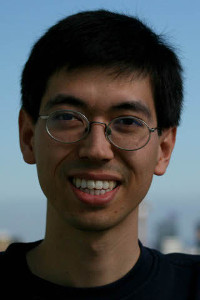
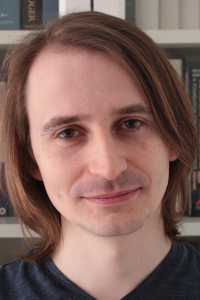
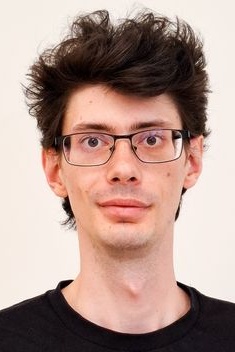
We regularly have openings for Bachelor, Master and PhD students — see teaching or contact ipp@hep.itp.tuwien.ac.at.
Recent graduates
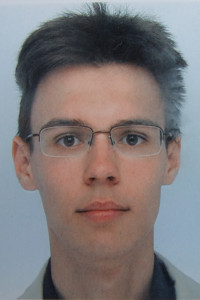
Kayran Schmidt
PhD 2026
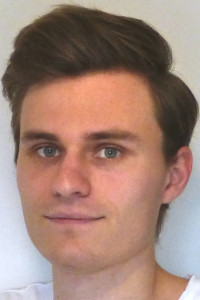
Markus Leuthner
PhD 2025
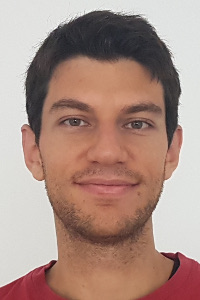
Matteo Favoni
PhD 2024

Felix Schlemmer
Diplom 2025
Former members
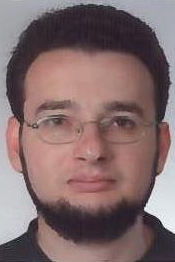
Daniil Gelfand
postdoctoral researcher (2016–2018)
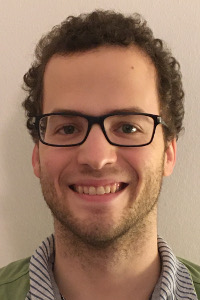
Daniel Schuh
Diplom 2021

Srinath Bulusu
Diplom 2021
Funding
- FWF project PAT3667424 — "Machine Learning with Renormalization Group for Lattice QCD" (2025–2029, PI: A. Ipp)
- FWF project P 34764-N27 — "Impact of glasma on heavy flavor azimuthal correlations and spectra" (2021–2026)
- FWF project P 32446-N27 — "Upscaling Glasma simulations using machine learning" (2019–2024)
- FWF project P 26582-N27 — "Exploring quark-gluon-plasma dynamics with CPIC simulations" (2014–2019)
Selected recent publications
- K. Holland, A. Ipp, D. I. Müller, U. Wenger, Machine-Learned Renormalization-Group-Improved Gauge Actions and Classically Perfect Gradient Flows, Phys. Rev. Lett. 136 (2026) 031901 (PRL, arXiv:2504.15870)
- G. Aarts, D. E. Habibi, A. Ipp, D. I. Müller, T. R. Ranner, L. Wang, W. Wang, Q. Zhu, Generalizable Equivariant Diffusion Models for Non-Abelian Lattice Gauge Theory (2026), arXiv:2601.19552
- G. Aarts, K. Fukushima, T. Hatsuda, A. Ipp, S. Shi, L. Wang, K. Zhou, Physics-driven learning for inverse problems in quantum chromodynamics, Nature Reviews Physics 7 (2025) 154, arXiv:2501.05580
- A. Ipp, M. Leuthner, D. I. Müller, S. Schlichting, K. Schmidt, P. Singh, Energy-momentum tensor of the dilute (3+1)D Glasma, Phys. Rev. D 109 (2024) 094040, arXiv:2401.10320
- K. Holland, A. Ipp, D. I. Müller, U. Wenger, Machine learning a fixed point action for SU(3) gauge theory with a gauge equivariant convolutional neural network, Phys. Rev. D 110 (2024) 074502, arXiv:2401.06481
- M. Favoni, A. Ipp, D. I. Müller, D. Schuh, Lattice gauge equivariant convolutional neural networks, Phys. Rev. Lett. 128 (2022) 032003, arXiv:2012.12901
Full list: Publications
Supervised theses
- Kayran Schmidt — PhD 2026, (3+1)D dilute Glasma initial conditions in simulations of heavy-ion collisions, reposiTUm
- Markus Leuthner — PhD 2025, Aspects of the dilute Glasma, reposiTUm
- Matteo Favoni — PhD 2024, Symmetry-preserving neural networks in lattice field theories, reposiTUm
- Felix Schlemmer — Diplom 2025, Using modern equivariant machine learning architectures as effective Hamiltonians for Monte Carlo simulations of quantum spin systems, reposiTUm
- Thomas R. Ranner — Diplom 2024, Sampling lattice field theories with score-based diffusion models, reposiTUm
- Lukas Einramhof — Diplom 2022, Group equivariant neural networks for a scalar field theory, reposiTUm
- Srinath Bulusu — Diplom 2021, Supervised learning in φ4 lattice field theory, reposiTUm
- Patrick Kappl — Diplom 2018, Implementing a 3+1-dimensional simulation for a color glass condensate model in C++, reposiTUm
- Peter Somkuti — Diplom 2011, Modifications of spectra and correlations through yoctosecond photon double pulses from a quark-gluon plasma, reposiTUm
Open-source software
- lge-cnn — Lattice Gauge Equivariant CNNs (L-CNNs), fixed-point actions and HMC simulations
- OpenPixi — simulation framework for the initial stages of heavy-ion collisions
Collaborations
We collaborate with the groups of K. Holland (University of the Pacific) and U. Wenger (University of Bern) on machine-learned fixed-point actions, with S. Schlichting (Bielefeld) and P. Singh on Glasma physics, and we participate in international community initiatives on machine learning and large physics models.
-
 DM-QFT Collaboration — theoretical physicists working at the interface of generative diffusion models and quantum field theory, from non-perturbative lattice methods to physics-driven learning for QFT.
-
 EuCAIF
— European Consortium for AI in Fundamental Physics. -
 COST Action AIFORIA (CA25172) — AI for Fundamental Physics: Open Roadmapping and Inclusive Actions.
-
 SCIANCE — AI in Science initiative (AI in Science Working Group “Astronomy and Fundamental Physics”).
Community & service
- EuCAIF — Fellow of the European Consortium for AI in Fundamental Physics, EuCAIF members.
- COST Action AIFORIA (CA25172) — member of the Management Committee (Austria), cost.eu/actions/CA25172.
- SCIANCE — member of the AI in Science Working Group “Astronomy and Fundamental Physics”, sciance.eu/aiswg-members.